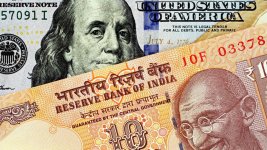
During Thursday's early European session, the Indian Rupee draws some sellers.
The INR will be impacted by Trump's proposals to impose a 26% tariff on Indian imports.
Later Thursday's highlights will be the US weekly Initial Jobless Claims and ISM Services PMI.
Due to the decline in Asian currency and equities markets following the imposition of broad-based tariffs by US President Donald Trump, the Indian Rupee (INR) is still under selling pressure on Thursday. As part of his broad plan to slap charges on all US imports, Trump announced on Wednesday that he will apply 26% tariffs on imports from India starting on April 9. The Trump administration's new US tariff policies put some selling pressure on the INR.
However, a decline in the price of crude oil would lessen the losses on the Indian rupee. Notably, India is the third-largest oil consumer in the world, and the value of the Indian rupee typically rises when crude oil prices decline.
Investors prepare for Thursday's release of the final S&P Global Services PMI, the ISM Services PMI, and the US weekly Initial Jobless Claims. The US March Nonfarm Payrolls report will be the focus of attention on Friday.
Following Trump's announcement of fresh tariffs, the Indian rupee declines.
At the White House, Trump declared the reciprocal tax. "We charge nearly nothing for years and decades, and they (India) charge us 52%."
In contrast to the first projections and the consensus of 57.6, the final reading of India's HSBC Manufacturing PMI increased to 58.1 in March.
With the help of foreign portfolios and other inflows, as well as a reduction in negative bets, the Indian Rupee recorded its best monthly performance in almost six years in March.
A substantial reversal from the roughly $12 billion in outflows saw in January and February occurred when foreign investors purchased about $4 billion worth of Indian stocks and bonds.
The Trump administration declared on Wednesday that the United States will apply additional taxes to about 60 countries with the biggest trade imbalances with the US and impose a 10% baseline tariff on all imports to the US.
Late Wednesday, US Treasury Secretary Scott Bessent issued a warning to trading partners that retaliation for the White House's slew of additional tariffs will only lead to more escalation.
According to Reuters, Fed Governor Adriana Kugler stated on Wednesday that increased tariffs in the US may contribute to longer-lasting inflation.
USD/INR continues the gloomy feel despite a bullish retaliation
During the day, the Indian Rupee is trading in negative territory. The price of the USD/INR pair is below the important 100-day Exponential Moving Average (EMA), which supports the daily chart's negative outlook. The 14-day Relative Strength Index (RSI), which is below the midline at 38.15, supports the downward momentum.
The low of April 2, 85.42, is the first level of support for USD/INR. The 85.00 psychological level is the next degree of disagreement to observe. The low of December 19, 84.84, is the downside objective farther south.
The 85.90–86.00 range, which corresponds to the 100-day EMA and round figure, is the pair's first upward hurdle. On the way to 87.00, the round mark, a clear break over this level can trigger a surge to 86.48, the low of February 21.
The INR will be impacted by Trump's proposals to impose a 26% tariff on Indian imports.
Later Thursday's highlights will be the US weekly Initial Jobless Claims and ISM Services PMI.
Due to the decline in Asian currency and equities markets following the imposition of broad-based tariffs by US President Donald Trump, the Indian Rupee (INR) is still under selling pressure on Thursday. As part of his broad plan to slap charges on all US imports, Trump announced on Wednesday that he will apply 26% tariffs on imports from India starting on April 9. The Trump administration's new US tariff policies put some selling pressure on the INR.
However, a decline in the price of crude oil would lessen the losses on the Indian rupee. Notably, India is the third-largest oil consumer in the world, and the value of the Indian rupee typically rises when crude oil prices decline.
Investors prepare for Thursday's release of the final S&P Global Services PMI, the ISM Services PMI, and the US weekly Initial Jobless Claims. The US March Nonfarm Payrolls report will be the focus of attention on Friday.
Following Trump's announcement of fresh tariffs, the Indian rupee declines.
At the White House, Trump declared the reciprocal tax. "We charge nearly nothing for years and decades, and they (India) charge us 52%."
In contrast to the first projections and the consensus of 57.6, the final reading of India's HSBC Manufacturing PMI increased to 58.1 in March.
With the help of foreign portfolios and other inflows, as well as a reduction in negative bets, the Indian Rupee recorded its best monthly performance in almost six years in March.
A substantial reversal from the roughly $12 billion in outflows saw in January and February occurred when foreign investors purchased about $4 billion worth of Indian stocks and bonds.
The Trump administration declared on Wednesday that the United States will apply additional taxes to about 60 countries with the biggest trade imbalances with the US and impose a 10% baseline tariff on all imports to the US.
Late Wednesday, US Treasury Secretary Scott Bessent issued a warning to trading partners that retaliation for the White House's slew of additional tariffs will only lead to more escalation.
According to Reuters, Fed Governor Adriana Kugler stated on Wednesday that increased tariffs in the US may contribute to longer-lasting inflation.
USD/INR continues the gloomy feel despite a bullish retaliation
During the day, the Indian Rupee is trading in negative territory. The price of the USD/INR pair is below the important 100-day Exponential Moving Average (EMA), which supports the daily chart's negative outlook. The 14-day Relative Strength Index (RSI), which is below the midline at 38.15, supports the downward momentum.
The low of April 2, 85.42, is the first level of support for USD/INR. The 85.00 psychological level is the next degree of disagreement to observe. The low of December 19, 84.84, is the downside objective farther south.
The 85.90–86.00 range, which corresponds to the 100-day EMA and round figure, is the pair's first upward hurdle. On the way to 87.00, the round mark, a clear break over this level can trigger a surge to 86.48, the low of February 21.