
In early European trading hours on Tuesday, markets are feeling cautiously bullish as they balance positive China's second-quarter GDP figures against US President Donald Trump's recent tariff threats and criticism of Federal Reserve (Fed) Chairman Jerome Powell.
If President Vladimir Putin does not agree to a peace agreement with Ukraine within 50 days, Trump has threatened to put harsh taxes on Russia.
Trump stated, "I am disappointed in him (Putin), but I am not done with him," in an interview with the BBC this Tuesday.
The US President, meanwhile, blasted Powell once more late Monday, saying that "interest rates should be at 1% or lower, rather than the 4.25% to 4.50% range the Fed has kept the key rate at so far this year."
In terms of facts, China's economy grew by 5.2% in the second quarter, which was slower than the 5.4% growth recorded in the first quarter but still exceeded forecasts of 5.1% growth.
In June, the country's yearly retail sales fell 4.8%, which was disappointing, while industrial production increased 6.8%, which was higher than anticipated.
Despite the confidence in China, investors are still trading cautiously ahead of the crucial US Consumer Price Index (CPI) data for June, which is scheduled to be released later in Tuesday's American session.
The key to determining the extent and timing of the Fed's interest rate decreases is the US inflation data. As a result of the USD's recent recovery from nearly four-year lows, traders are turning to taking profits off the table on their long holdings.
However, because of the ongoing bullish pressure on the USD/JPY pair, the USD downside seems to be limited.
A severe selling wave hit Japanese government bonds, and the rates spiked to multi-year highs due to impending budgetary concerns and an unpredictable political environment. The Japanese yen (JPY) is still being weakened by the instability in the domestic bond market.
Reuters said that "Japan's ruling coalition will likely lose its majority in the upper house election on July 20 and heighten the risk of political instability at a time the country struggles to clinch a trade deal with the US," citing an article from the Asahi daily.
A muted USD performance compared to its major rivals has helped EUR/USD recover toward 1.1700 as it awaits further signals about the trade negotiations between the US and the EU. Focus is also on the Eurozone Industrial Production figures and the mid-tier German ZEW Survey.
In the event that no trade agreement is achieved by August 1, the EU is preparing tariffs on US imports, including coffee, alcohol, medical devices, and airplanes, valued at 72 billion euros ($84 billion), according to a Wall Street Journal (WSJ) report that was reported in early Asia on Tuesday.
As the higher-yielding Pound Sterling benefits from a stronger risk appetite, the GBP/USD exchange rate is steadily rising toward 1.3450.
China's economic resiliency is providing some solace to the Antipodeans, despite the AUD/USD being rangebound at about 0.6550. The NZD/USD pair is somewhat higher on the day and is getting closer to the 0.6000 round milestone.
Due to fresh declines in the price of oil and the greenback, USD/CAD is still trapped in a small band around 1.3700. For a distinct directional push, traders watch the US and Canadian inflation reports.
WTI dismisses the geopolitical and trade concerns between the US and Russia and continues the previous sell-off, trading close to weekly lows below $65.50.
Gold makes a strong comeback to retest the crucial $3,377 Fibonacci Retracement level of the April record rise. The daily technical setup continues to benefit purchasers.
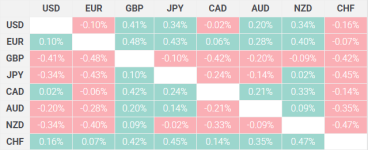
Price in US dollars This week
If President Vladimir Putin does not agree to a peace agreement with Ukraine within 50 days, Trump has threatened to put harsh taxes on Russia.
Trump stated, "I am disappointed in him (Putin), but I am not done with him," in an interview with the BBC this Tuesday.
The US President, meanwhile, blasted Powell once more late Monday, saying that "interest rates should be at 1% or lower, rather than the 4.25% to 4.50% range the Fed has kept the key rate at so far this year."
In terms of facts, China's economy grew by 5.2% in the second quarter, which was slower than the 5.4% growth recorded in the first quarter but still exceeded forecasts of 5.1% growth.
In June, the country's yearly retail sales fell 4.8%, which was disappointing, while industrial production increased 6.8%, which was higher than anticipated.
Despite the confidence in China, investors are still trading cautiously ahead of the crucial US Consumer Price Index (CPI) data for June, which is scheduled to be released later in Tuesday's American session.
The key to determining the extent and timing of the Fed's interest rate decreases is the US inflation data. As a result of the USD's recent recovery from nearly four-year lows, traders are turning to taking profits off the table on their long holdings.
However, because of the ongoing bullish pressure on the USD/JPY pair, the USD downside seems to be limited.
A severe selling wave hit Japanese government bonds, and the rates spiked to multi-year highs due to impending budgetary concerns and an unpredictable political environment. The Japanese yen (JPY) is still being weakened by the instability in the domestic bond market.
Reuters said that "Japan's ruling coalition will likely lose its majority in the upper house election on July 20 and heighten the risk of political instability at a time the country struggles to clinch a trade deal with the US," citing an article from the Asahi daily.
A muted USD performance compared to its major rivals has helped EUR/USD recover toward 1.1700 as it awaits further signals about the trade negotiations between the US and the EU. Focus is also on the Eurozone Industrial Production figures and the mid-tier German ZEW Survey.
In the event that no trade agreement is achieved by August 1, the EU is preparing tariffs on US imports, including coffee, alcohol, medical devices, and airplanes, valued at 72 billion euros ($84 billion), according to a Wall Street Journal (WSJ) report that was reported in early Asia on Tuesday.
As the higher-yielding Pound Sterling benefits from a stronger risk appetite, the GBP/USD exchange rate is steadily rising toward 1.3450.
China's economic resiliency is providing some solace to the Antipodeans, despite the AUD/USD being rangebound at about 0.6550. The NZD/USD pair is somewhat higher on the day and is getting closer to the 0.6000 round milestone.
Due to fresh declines in the price of oil and the greenback, USD/CAD is still trapped in a small band around 1.3700. For a distinct directional push, traders watch the US and Canadian inflation reports.
WTI dismisses the geopolitical and trade concerns between the US and Russia and continues the previous sell-off, trading close to weekly lows below $65.50.
Gold makes a strong comeback to retest the crucial $3,377 Fibonacci Retracement level of the April record rise. The daily technical setup continues to benefit purchasers.
Price in US dollars This week
