
As concerns about a US economic slump subside after a federal court ruled to prevent US President Donald Trump's 'Liberation Day' tariffs, markets turn risk-positive in the second half of the week. On Thursday, the US Bureau of Economic Analysis will publish its second estimate of GDP growth for the first quarter. Weekly Initial Jobless Claims and April Pending Home Sales data will also be available on the US economic calendar.
According to Reuters, the Court of International Trade declared late Wednesday that President Trump had overreached himself by putting universal penalties on imports from the US' trade partners, and that as a result, his reciprocal tariffs would not be implemented. "That use is prohibited not because it is stupid or ineffectual, but because federal law does not allow it," a three-judge panel stated in response to the use of tariffs as leverage. According to reports, the Trump administration has already submitted a notice of appeal, contesting the court's jurisdiction.
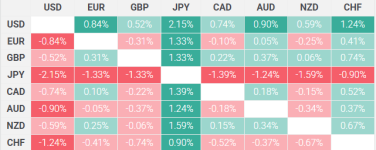
The instant response strengthened the US dollar (USD), as the USD Index rose above 100.50 to its highest level in more than a week. In keeping with the better tone of the market, the USD Index was up 0.25% on the day at 100.12 at the time of writing, while US stock index futures were rising 1.3% to 2%.
Meanwhile, officials expressed heightened apprehension on the economic outlook, according to the minutes of the Federal Reserve's May meeting. "If inflation proved more persistent as outlooks for GDP and employment worsened," the journal said, "participants recognized they may confront challenging trade-offs."
During the Asian session, gold experienced significant bearish pressure and dropped to $3,250, its lowest level since May 20, before rising again. At the time of writing, XAU/USD was trading at $3,270, down 0.5% for the day.
By the European morning, EUR/USD had recovered above 1.1250 after continuing its weekly decline and approaching 1.1200.
After ending the previous two days in negative territory, the GBP/USD pair continued to decline toward 1.3400 during Thursday's Asian session. The pair trades slightly lower on the day at about 1.3450 after regaining its momentum in the early European session.
On Thursday, Japanese Finance Minister Katsunobu Kato stated that he shared US Treasury Secretary Scott Bessent's belief that the market should determine exchange rates. Ryosei Akazawa, Japan's chief trade negotiator and minister of economy, stated that he would like to have ministerial meetings with Bessent and reaffirmed their desire that the US reevaluate its tariff policies. Building on its weekly gains, the USD/JPY trades over 145.50, up by roughly 0.5% during the day.
According to Reuters, the Court of International Trade declared late Wednesday that President Trump had overreached himself by putting universal penalties on imports from the US' trade partners, and that as a result, his reciprocal tariffs would not be implemented. "That use is prohibited not because it is stupid or ineffectual, but because federal law does not allow it," a three-judge panel stated in response to the use of tariffs as leverage. According to reports, the Trump administration has already submitted a notice of appeal, contesting the court's jurisdiction.
The instant response strengthened the US dollar (USD), as the USD Index rose above 100.50 to its highest level in more than a week. In keeping with the better tone of the market, the USD Index was up 0.25% on the day at 100.12 at the time of writing, while US stock index futures were rising 1.3% to 2%.
Meanwhile, officials expressed heightened apprehension on the economic outlook, according to the minutes of the Federal Reserve's May meeting. "If inflation proved more persistent as outlooks for GDP and employment worsened," the journal said, "participants recognized they may confront challenging trade-offs."
During the Asian session, gold experienced significant bearish pressure and dropped to $3,250, its lowest level since May 20, before rising again. At the time of writing, XAU/USD was trading at $3,270, down 0.5% for the day.
By the European morning, EUR/USD had recovered above 1.1250 after continuing its weekly decline and approaching 1.1200.
After ending the previous two days in negative territory, the GBP/USD pair continued to decline toward 1.3400 during Thursday's Asian session. The pair trades slightly lower on the day at about 1.3450 after regaining its momentum in the early European session.
On Thursday, Japanese Finance Minister Katsunobu Kato stated that he shared US Treasury Secretary Scott Bessent's belief that the market should determine exchange rates. Ryosei Akazawa, Japan's chief trade negotiator and minister of economy, stated that he would like to have ministerial meetings with Bessent and reaffirmed their desire that the US reevaluate its tariff policies. Building on its weekly gains, the USD/JPY trades over 145.50, up by roughly 0.5% during the day.
